
Hyperpigmentation
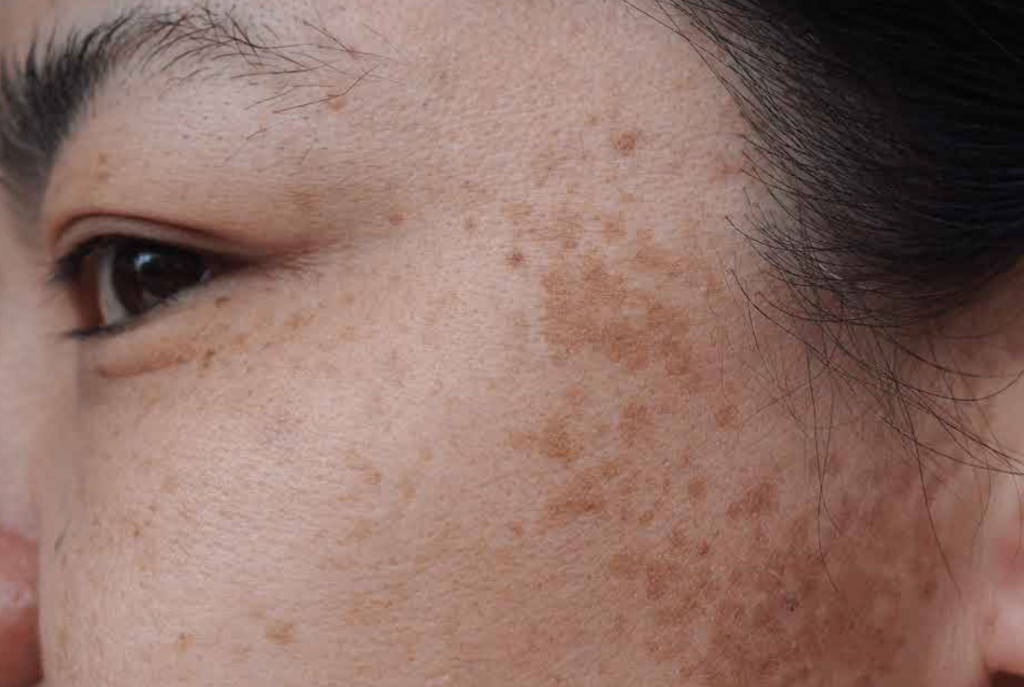
The woes of Hyperpigmentation affect many people of all ages, races, genders, and skin types. In fact, it is so common, most of us will have to resolve it at some point in our lives.
WHAT IS HYPERPIGMENTATION?
Hyperpigmentation is a condition where some parts of the skin become darker than others. Our skin is comprised of melanocytes, the cells responsible for making melanin – the pigment that gives our skin its colour. When the melanocytes malfunction, they overproduce melanin and this is then deposited in the top layers of skin, creating light to dark brown spots, or deeper in the layers creating gray tones. While it doesn’t hurt, it can be incredibly frustrating and lend to self consciousness.
WHY DOES IT HAPPEN?
There are many factors to consider when it comes to Hyperpigmentation including sun exposure, hormonal changes, acne, injuries, and inflammation.
Types Of HYPERPIGMENATION:
Hyperpigmentation, like acne and other skin woes, varies in severity and even has different types. It isn’t necessarily a condition but a term that describes skin that appears darker. It can occur in both small or large patches, affect the whole body, and come and go. Here are a few conditions we categorize as Hyperpigmentation.
Sunspots: The most common type f hyperpigmentation is sun spots – also referred to as age or liver spots. These are caused by sun damage and often crop up immediately after sun exposure, although they can appear years later.
Melasma: Believed to be caused by hormonal changes and often develops during pregnancy which is why this is also dubbed pregnancy mask. Melasma is a common skin problem caused by brown to gray-brown patches on the face. Most people get it on their cheeks, chin, nose bridge, forehead, and above the upper lip. It is more common in women than men and also affects woman taking oral contraceptives and hormones.
Age Spots: These spots vary from tan to dark brown and are larger than freckles. They develop in adults due to sun exposure or previous sunburns, on areas such as the face, forearms, chest, and tops of the hands.
Post-Inflammatory: Discouloration due to skin inflammation or injury, such as burns, wounds, acne, or skin rashes. The skin looks darker or changes in color after the lesion heals.
WHAT CAUSES HYPERPIGMENTATION?
Like many skin conditions, there are lifestyle factors that trigger or exacerbate Hyperpigmentation.
Our clinic has a lot of experience with Hyperpigmentation and help many clients become more comfortable in their skin. Instead of struggling with your skin conditions, consider booking a complimentary consultation so we can outline a skincare routine to benefit you. Hyperpigmentation has many options when it comes to treatments and products designed to relieve your symptoms.